Summer 2024
Ars Mercatoria
Project Lead: Helena Miton
Merchant textbooks were exchanged for centuries in Western Europe (especially Low Countries, France and Italy) and included various types of information, including, but not limited to, describing the ideal of the profession and their desired qualities, economic information including which goods could be found in which city (and at which rates), social and institutional information (e.g., what are the institutions and customs of trading in different places), and arithmetic and book-keeping skills. Historical scholarship has only scratched the surface of the rich and diverse information. The Ars Mercatoria Project builds on the catalog of merchants’ manuals of the same name, covering thousands of manuals over the time period 1470-1700. This project aims to sketch a better understanding of the knowledge that was deemed worth circulating -in print- by a professional community.
Project Members
Project Team
Helena Miton
Assistant Professor in the Graduate School of Business
Joy Kim
Undergraduate Researcher - Summer, 2024
Exploring Merchant Manuals
This summer at CESTA, I worked on the Ars Mercatoria Project, where I primarily searched through five main libraries (Madrid BN, Paris BN, Leiden UB, Amsterdam EHB, Kunitachi HitUL), for digitized merchant-related texts listed in the Ars Mercatoria Catalog, including arithmetic textbooks and travel accounts. Out of 825 texts from these libraries, there were 211 total digitized renditions that I could source for the project.
| Library | Number of Manuscripts | Number of Digitized Manuscripts |
|---|---|---|
| Paris BN | 464 | 44 |
| Leiden UB | 47 | 1 |
| Amsterdam EHB | 235 | 139 |
| Madrid BN | 64 | 14 |
| Kunitachi HitUL | 15 | 13 |
Initially, there were struggles with sourcing these manuscripts, from a linguistic level. For instance, producing editions with modified or romanized titles was a popular practice. Additionally, some publishers reproduced manuscripts into multiple parts, and so tracking each individual part proved to be a difficult task. However, as I grew accustomed to linguistic conventions and took initiative to learn key phrases, I was able to effectively source the manuscripts.
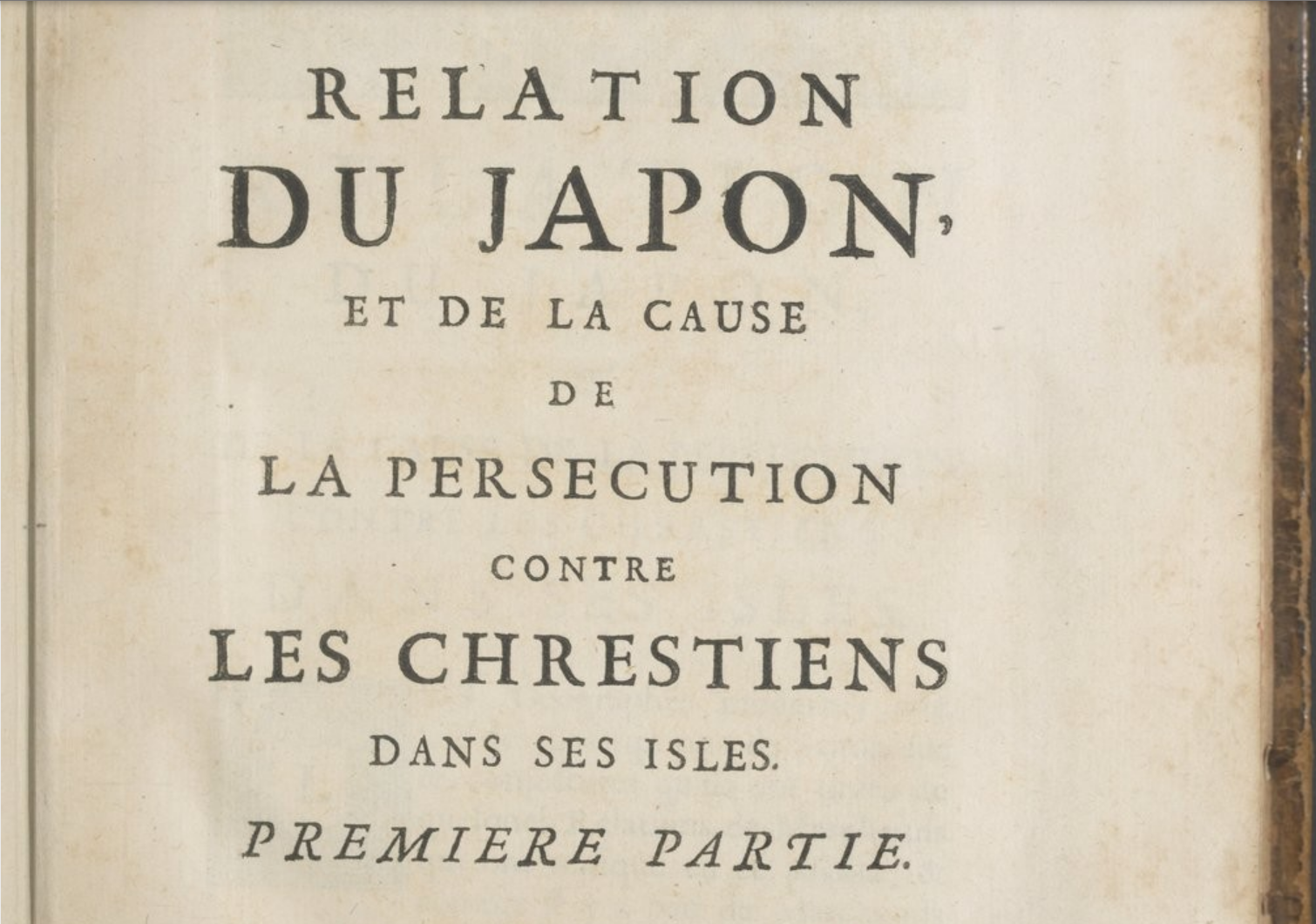
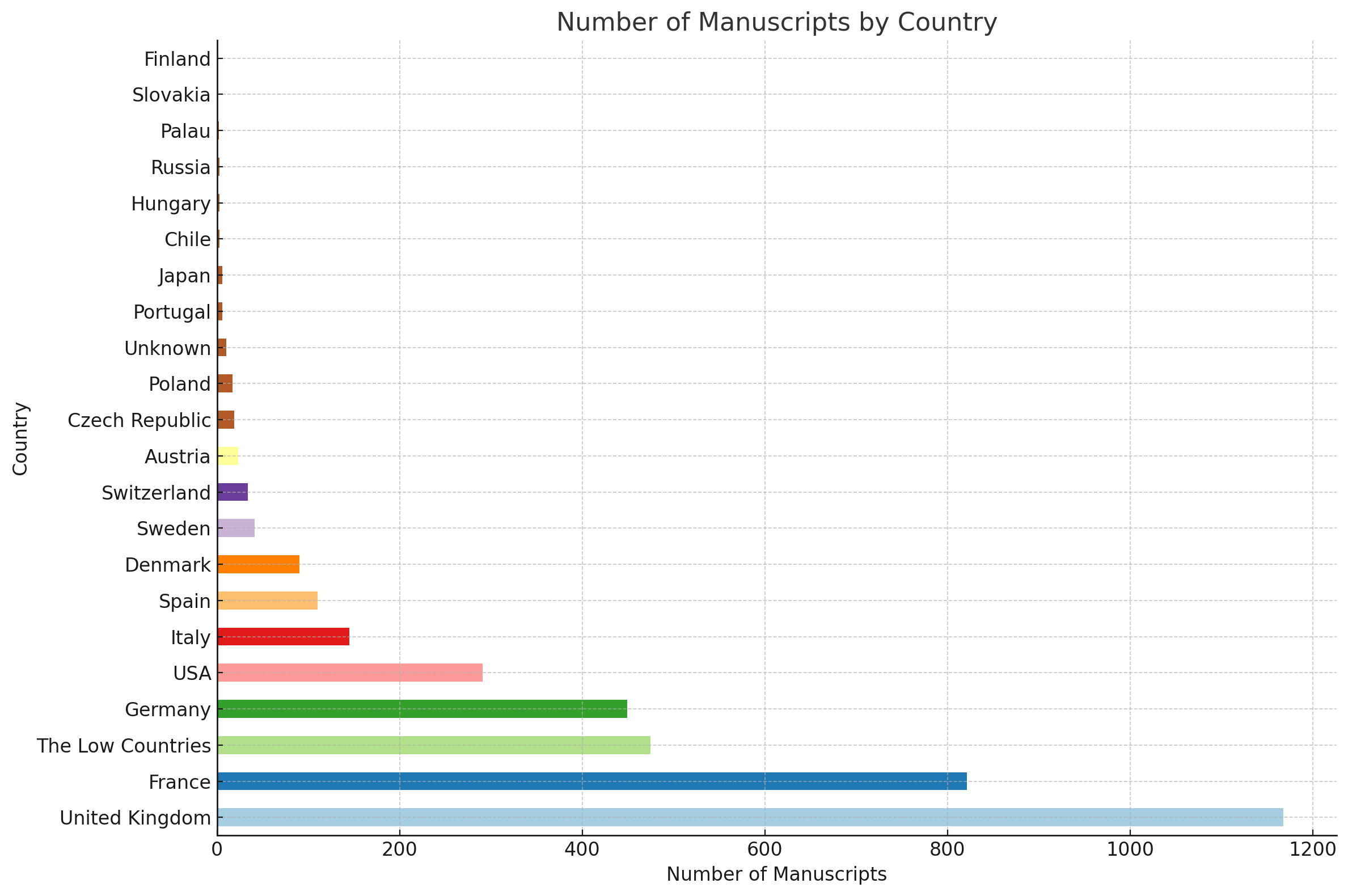
I then systematically organized these manuscripts by geographic region and recorded detailed metadata, including library of origin, publication date, publisher, and author. Additionally, I created catalogues of author and publisher relationships for each library, in order to highlight the connections between individuals.
A few interesting trends were brought to light: some authors published for themselves; others sought out the same publisher for all of the book’s editions. To better illustrate this, I then created an interactive data visualization of author-publisher relationships from Amsterdam EHB, since it had the most complete meta-data out of all the libraries.

Figure 3. This is a network graph depicting the connections between authors and publishers of manuscripts housed in the Amsterdam EHB library.
Overall, this summer was focused on sourcing the data needed to glean insights on the networks and processes that contributed to the spread of commercial knowledge in Europe.