Summer 2024
Visualizing Ancient Aramiac Manuscripts
Project Lead: Michael Penn
Early Christians wrote in three main languages: Greek, Latin, and—especially in what is now the Middle East—a dialect of Aramaic called Syriac. Approximately ten million modern Christians trace their lineage to the ancient Syriac churches. In the last century, Syriac Christians were the targets of a genocide during World War I, the chaos following the second Iraq war decimated their churches in Iraq, the civil war in Syria has been even more destructive to these communities. This has made it especially challenging for Syriac Christians to preserve their history, traditions, and patrimony. The challenge is compounded by the most important collection of early Syriac manuscripts remaining mostly undigitized and thus inaccessible to those who cannot travel to London. Stanford has recent dedicated funds to help digitize the British Library’s Syriac manuscripts. This will enable historians, liturgists, musicologists, and theologians—both those within the Syriac communities and those studying the tradition from outside—to finally have open access to the earliest witnesses to this ancient, but now endangered, tradition.
Project Members
Project Team
Michael Penn
Professor of Religious Studies
Stephanie Cho
Undergraduate Researcher - Summer, 2024
Exploring and Storing Data About Manuscripts
My job was to collect data on both published and unpublished texts found in surviving Syriac manuscripts. Syriac is now primarily a liturgical language, but previously it was a prevalent western dialect of Aramaic in which many important early Christian texts in the Middle East were Written. The first project entailed comparing two collections containing descriptions of hundreds of Syriac manuscripts from various libraries and catalogs, and figuring out which ones have yet to be published. I also had to collect data such as the contents of the manuscript, where the information was located, and which specific pages had yet to be published. The second project entailed looking at a database of digitized manuscripts published by the Vatican, and collecting data such as the page dimensions of the manuscript, the date or era of publication, what kind of manuscript it was and its purpose, as well as the material of the manuscript. The third project was following up with manuscripts still in the Middle East in a similar manner with the Vatican manuscripts to record both physical and content related data about them that have yet to be collected. Throughout the summer I worked with well over 1000+ manuscripts.
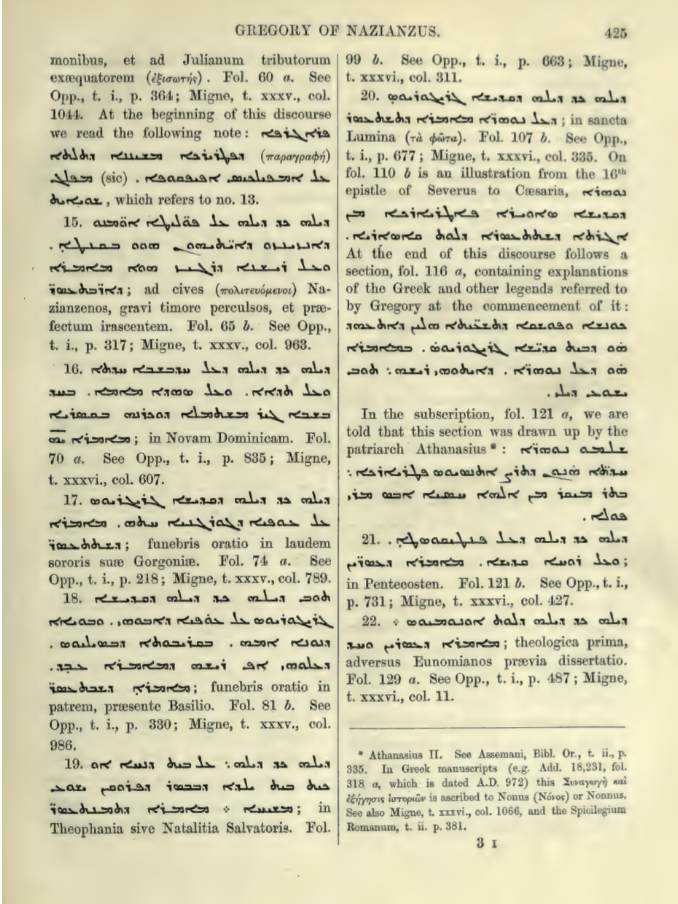
All of these data points were logged into three different spreadsheets, one for the unpublished manuscripts data, one containing data regarding the Vatican manuscripts, and the last one for the manuscripts still in the Middle East. Then, it was time to familiarize myself with Tableau, a software for data analysis and creating both static and interactive data visualizations, to use the data I collected to analyze interesting trends and patterns regarding the manuscripts I was given to clean the data of. Perhaps there is a certain period in which many manuscripts are unpublished, or it appears that a certain size of manuscript is much rarer than another. I am also working with previous visualizations from past interns and updating them as well as creating my own.
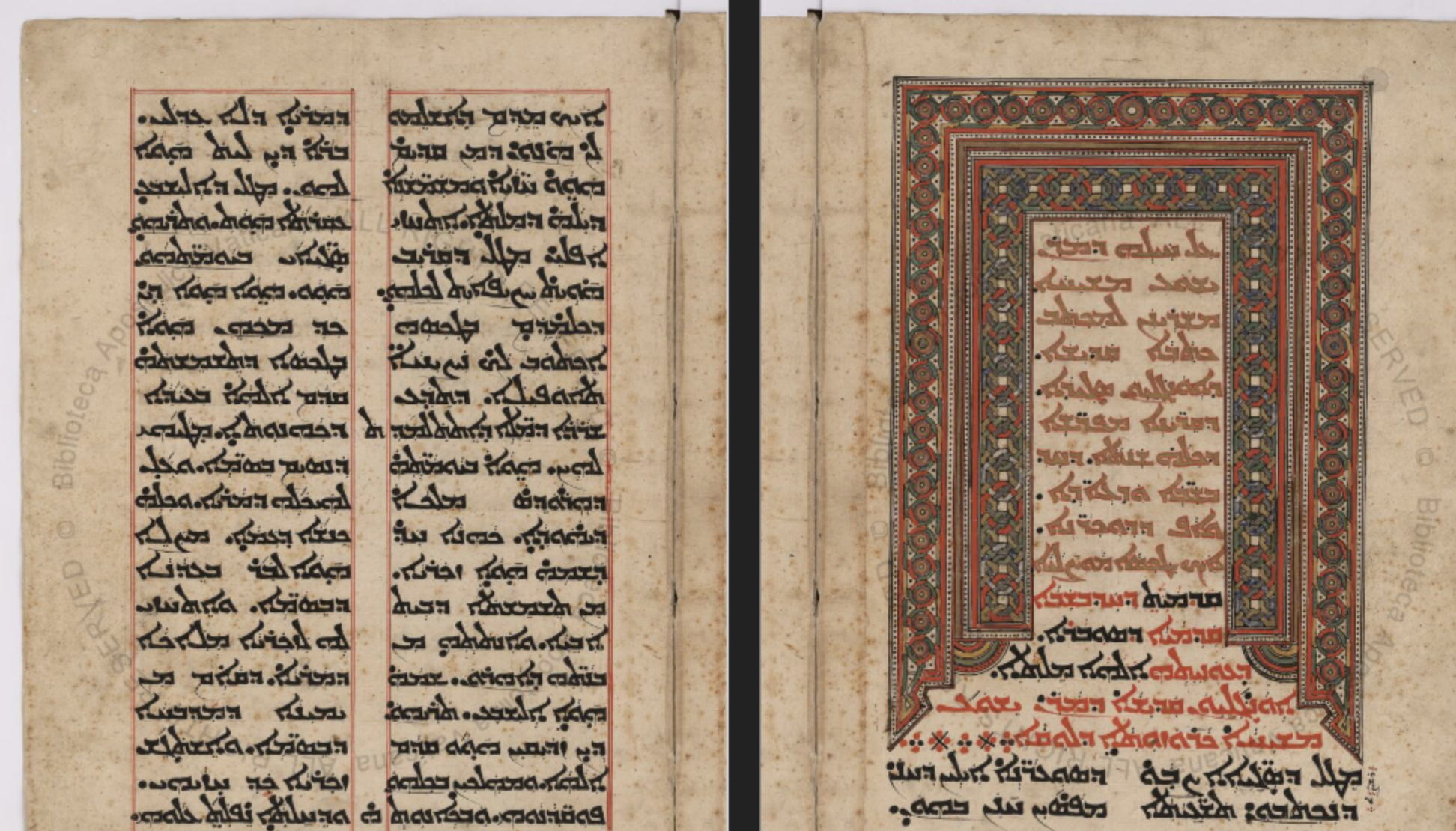
I am part of a larger team of interns working with professors across different institutions that have been publishing and digitizing these manuscripts to make them accessible to scholars and communities that cannot easily access them. More people will continue to add to the data and work with my metadata to figure out which ones are of greater importance to publish. The last part of my summer included some research on quantitative codicology (the archaeology of the book) to help the continuing problem of data categorization and organization of new digital libraries.